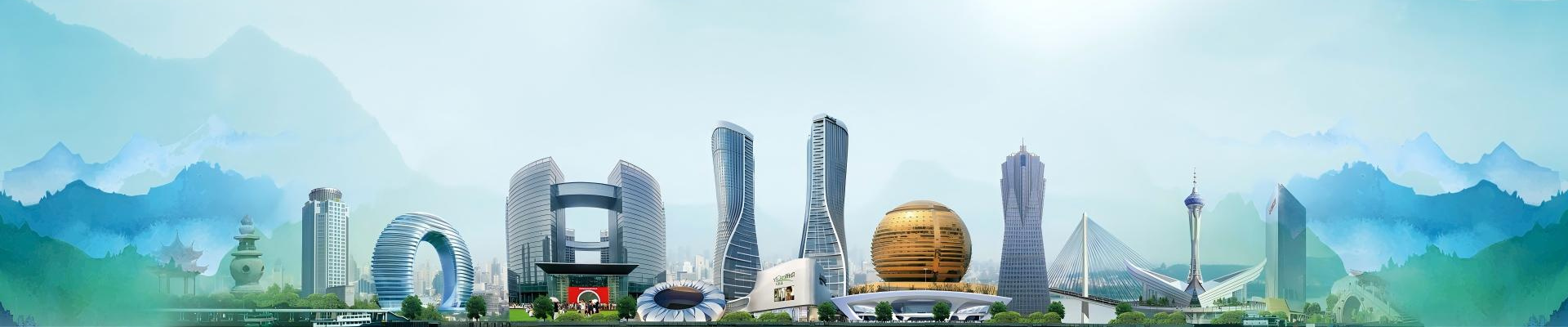
Hangzhou, capital of Zhejiang sheng (province), China. The city is located in the northern part of the province on the north bank of the Qiantang River estuary at the head of Hangzhou Bay. It has water communications with the interior of Zhejiang to the south, is the southern terminus of the Grand Canal, and is linked to the network of canals and waterways that cover the Yangtze River (Chang Jiang) delta area to the north. The city stands at the eastern foot of a scenic range of hills, the Tianmu (“Eye of Heaven”) Mountains, and on the shore of the famous Xi (West) Lake, celebrated in poetry and paintings for its beauty and a favorite imperial retreat.
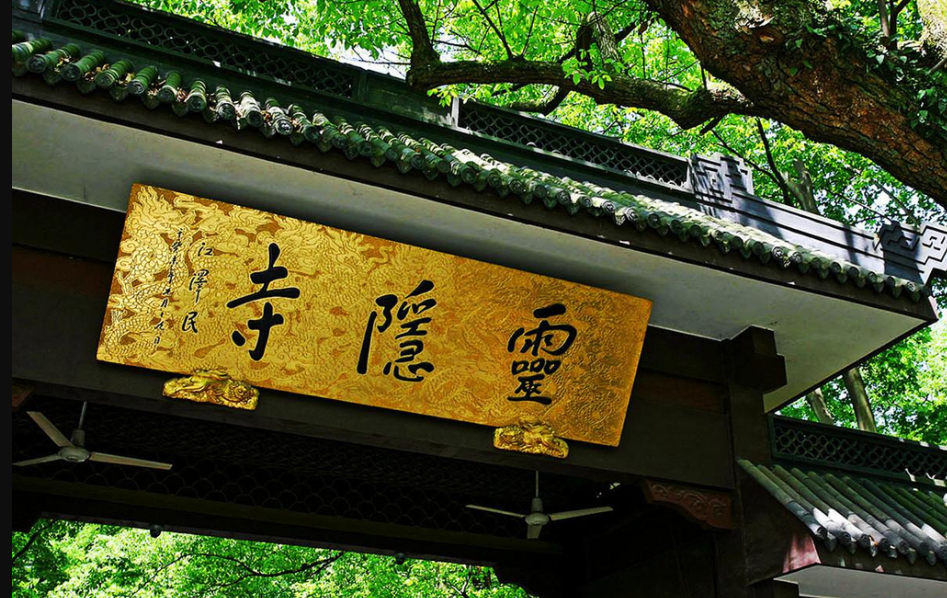
Lingyin Temple, established in 326 A.D. is the most famous temple in Hangzhou with a long history of about 1,700 years. Situated at the west end of the West Lake, the temple is confronted with Feilai Mountain and backed by Beigao Mountain. In the section flanked by the two mountains are massive trees, the old temple, and dramatic clouds in many shapes and sizes.
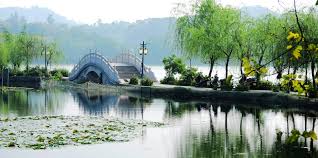
West Lake is a freshwater lake in Hangzhou. It is divided into five sections by three causeways. There are numerous temples, pagodas, gardens, and artificial islands within the lake. West Lake has influenced poets and painters throughout China's history for its natural beauty and historic relics, and it has also been among the most important sources of inspiration for Chinese garden designers. It was made a UNESCO World Heritage Site in 2011, described as having "influenced garden design in the rest of China as well as Japan and Korea over the centuries" and reflecting "an idealized fusion between humans and nature".
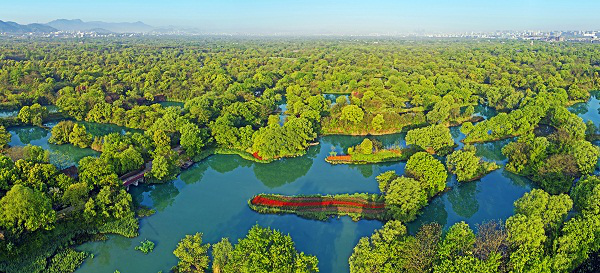
Xixi National Wetland Park is the only national wetland park in China, located at the west part of Hangzhou, a total of 1,150 hectares (2,800 acres). The park is densely crisscrossed with six main watercourses, among which scatter various ponds, lakes and swamps. XiXi Wetland has a history of more than 1,800 years and an abundant cultural heritage. It's the original site of Chinese South Opera; it has a traditional Dragon Boat Contest; it contains the vivid life of a water village, featuring silkworm feeding and silk production.
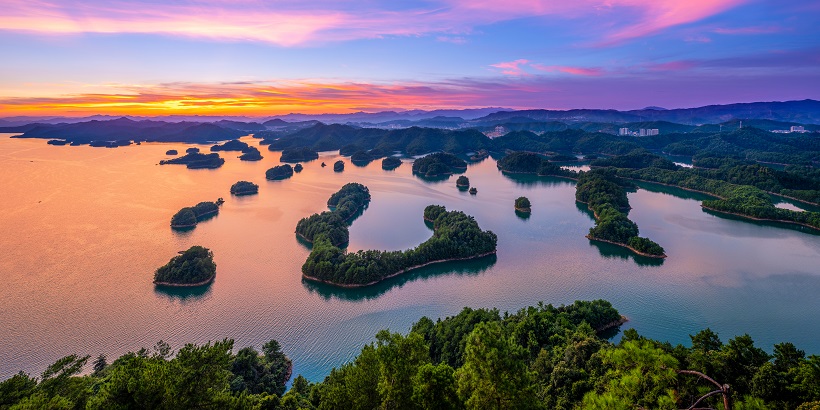
Qiandao Lake is a man-made lake located in Chun'an County, Zhejiang, China, formed after the completion of the Xin'an River hydroelectric station in 1959. 1,078 large islands dot the lake and a few thousand smaller ones are scattered across it. The lake covers an area of 573 km² and has a storage capacity of 17.8 km³. The islands in the lake cover about 86 km². Qiandao Lake, known for its clear, and sometimes drinkable water, is used to produce the renowned Nongfu Spring brand of mineral water. It is also home to lush forests (over 90%), and exotic islands. Its more popular attractions include Bird Island, Snake Island, Monkey Island, Lock Island (featuring supposedly the world's biggest lock), and the Island to Remind You of Your Childhood.
Disclaimer for Images: All images of Hangzhou's scenic spots (including Lingyin Temple, West Lake, Xixi National Wetland Park, and Qiandao Lake) are used for informational purposes only to illustrate the conference location. The copyright of these images belongs to their respective original creators/owners. IC2DE 2027 committee does not claim any ownership or copyright over these images. If you are the copyright owner and wish to have the images removed, please contact us at ic2de_committee@outlook.com and we will process your request promptly.
图片版权免责声明: 本页面所有图片仅用于展示会议举办地信息,图片版权归原作者/所有者所有。IC2DE 2027 组委会不对这些图片主张任何所有权或版权。如果您是版权所有者并希望移除相关图片,请通过邮箱 ic2de_committee@outlook.com 联系我们,我们将及时处理您的请求。